Introduction to Adaptations
Term 1, Week 3, Lesson 1
Do Now
In your book, answer this question:
Look at the three images below. For each organism, write down one feature you think helps it survive in its environment.
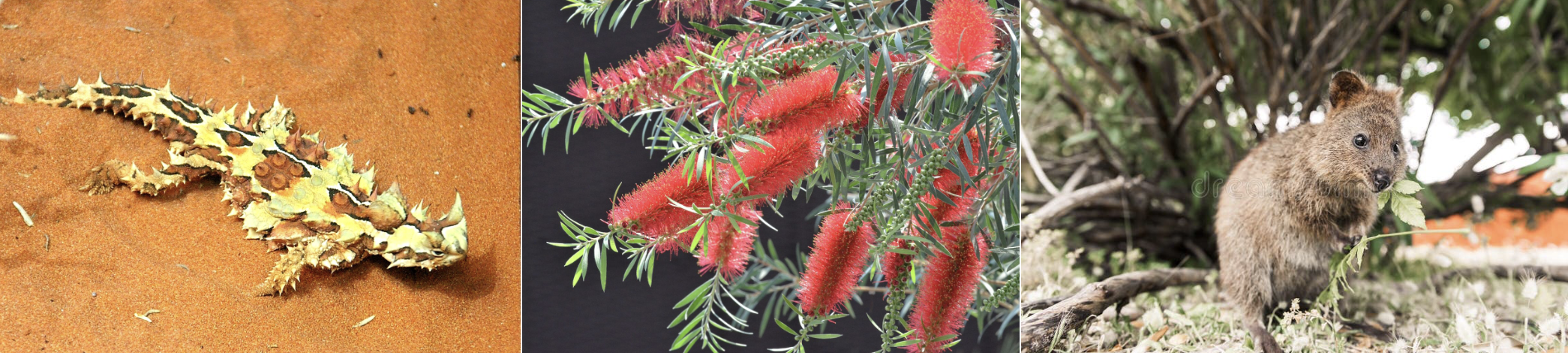
| Organism | Feature that helps it survive | How does it help? |
|---|---|---|
| Thorny devil | ||
| Bottlebrush | ||
| Quokka |
You have 3 minutes.
Daily Review
Answer the following 5 multiple choice questions in your book:
- A close, long-term interaction between two different species is called:
- Competition
- Predation
- Symbiosis
- Decomposition
- Which type of symbiotic relationship benefits both organisms?
- Parasitism
- Commensalism
- Mutualism
- Predation
- A tick feeding on a kangaroo is an example of:
- Mutualism
- Commensalism
- Competition
- Parasitism
- When two different species compete for the same food source, this is called:
- Intraspecific competition
- Interspecific competition
- Mutualism
- Predation
- In a predator-prey relationship, what happens to the predator population when the prey population decreases?
- It increases
- It stays the same
- It decreases
- It doubles
Learning Intentions
Today we are learning about what an adaptation is and why adaptations are essential for the survival and reproduction of organisms.
Success Criteria
You will be successful if you have:
Keywords
- Adaptation
- An inherited characteristic that improves an organism’s ability to survive and reproduce in its particular environment.
- Natural selection
- The process by which organisms with traits better suited to their environment are more likely to survive, reproduce, and pass on those traits to the next generation.
- Inherited trait
- A characteristic that is passed from parents to offspring through genes.
- Survival advantage
- A feature or behaviour that increases an organism’s chances of staying alive and reproducing in its environment.
Learning Activities
Activity 1 — I DO: What Is an Adaptation?
Defining Adaptation
An adaptation is an inherited characteristic that improves an organism’s ability to survive and reproduce in its environment.
Key points:
- Adaptations are inherited — they are passed from parents to offspring through genes.
- Adaptations develop over many generations through a process called natural selection.
- Organisms with beneficial traits are more likely to survive, reproduce, and pass those traits on.
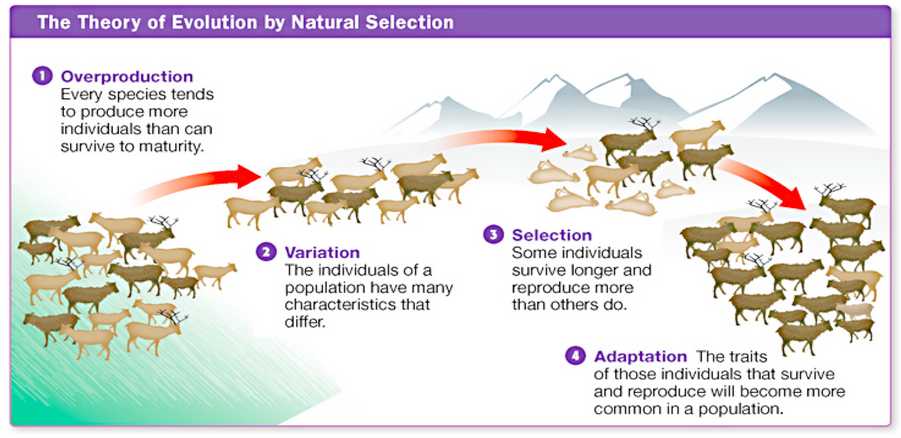
How Do Adaptations Develop?
- Within a population, individuals have variation — they are not all identical.
- Some variations give a survival advantage in a particular environment.
- Individuals with the advantage are more likely to survive and reproduce.
- Over many generations, the beneficial trait becomes more common in the population.
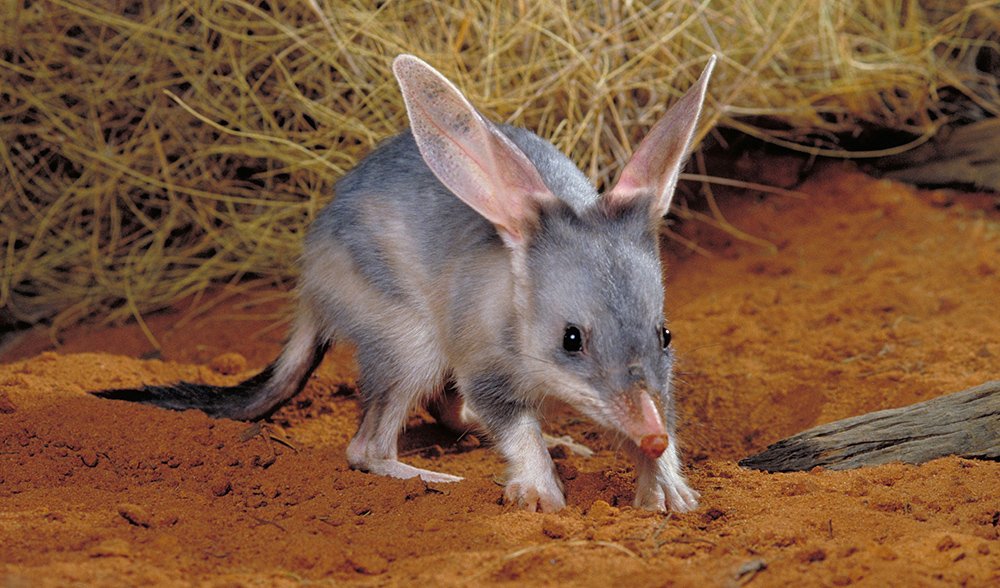
Example: Bilbies have large ears. Bilbies with larger ears could lose more body heat in the hot desert, helping them stay cool. Over many generations, large ears became a common feature of the bilby population.
What Is NOT an Adaptation?
Not every feature or behaviour is an adaptation. Ask yourself: “Is this trait inherited and does it help the organism survive in its environment?”
| Feature | Adaptation? | Why / Why not? |
|---|---|---|
| A bilby’s large ears | ✓ | Inherited trait that helps regulate body temperature in the desert |
| A dog that learns to sit on command | ✗ | Learned behaviour — not inherited |
| A person getting a suntan | ✗ | Temporary response to the environment — not passed to offspring |
| A banksia’s woody follicles that open after fire | ✓ | Inherited structural feature that aids seed dispersal after bushfire |
| A scar on an animal from a fight | ✗ | Result of injury — not inherited |
Australian Examples of Adaptations
| Organism | Adaptation | How it helps |
|---|---|---|
| Bilby | Large ears | Radiates excess body heat in hot desert environments |
| Banksia | Woody follicles that open after fire | Seeds are released into freshly cleared ground with reduced competition |
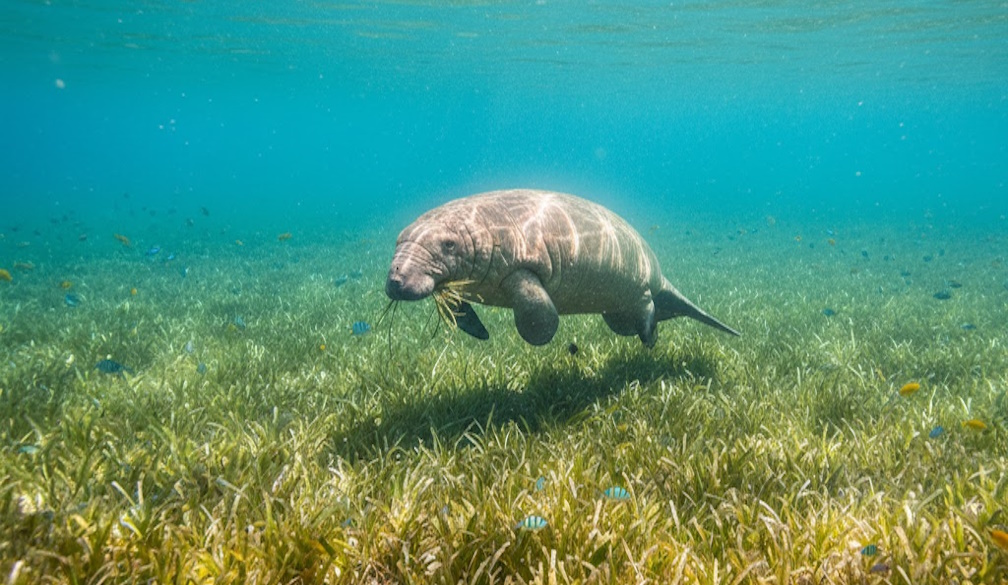
| Dugong (Shark Bay) | Streamlined body shape | Moves efficiently through water to access seagrass beds |
| Thorny devil | Spiny skin with channels | Collects moisture from dew and directs it to the mouth |
| Boab tree (Kimberley) | Swollen trunk | Stores water during the dry season |
Check for Understanding
Quick check: Classify each of the following as ‘adaptation’ or ‘not an adaptation’:
- A kangaroo’s strong hind legs → ___________
- A pet bird that talks → ___________
- A cactus with thick, waxy skin → ___________
- A broken branch on a tree → ___________
Answers: 1. Adaptation, 2. Not an adaptation (learned), 3. Adaptation, 4. Not an adaptation (damage)
Activity 2 — WE DO: Identifying Adaptations in Australian Organisms
As a class, we will examine a set of organism cards and identify adaptations for each.

For each organism, complete the table:
| Organism | One adaptation you can identify | How does this adaptation help it survive? |
|---|---|---|
| Wedge-tailed eagle | ||
| Red kangaroo | ||
| Bottle tree (Kimberley) | ||
| Numbat | ||
| Jarrah tree | ||
| Dolphin (Shark Bay) |
Discussion Questions
- Which adaptations were easiest to spot? Why?
- Were any organisms difficult to identify adaptations for?
- Could any of these adaptations be useful in a different environment?
Activity 3 — YOU DO: Matching Adaptations to Survival
Complete the worksheet: 131-introduction-to-adaptations-you-do.docx
You will match organisms to their adaptations and write a sentence explaining how each adaptation improves survival.
Work independently. You have 10 minutes to complete the worksheet.
Notes
Use this space to write any important points from today’s lesson.
Reflection
Quick Quiz
An adaptation is best defined as:
- Any feature of an organism
- An inherited characteristic that helps an organism survive and reproduce
- A behaviour that an animal learns
- A temporary change in response to the environment
True or False: A dog learning to fetch a ball is an example of an adaptation.
True or False: Adaptations develop over many generations through natural selection.
The bilby’s large ears are an adaptation because they help the bilby:
- Hear predators from far away
- Dig burrows faster
- Radiate excess body heat in the desert
- Attract a mate
A student notices that a lizard changes colour when it moves from a rock to grass. Is this necessarily an adaptation? Explain your reasoning in one sentence.
Home-study
Choose one Australian animal or plant. Research one adaptation it has and write a short paragraph (3–4 sentences) explaining what the adaptation is, what type of environment the organism lives in, and how the adaptation helps it survive.