Responding to the Environment
Term 1, Week 5, Lesson 1
Do Now
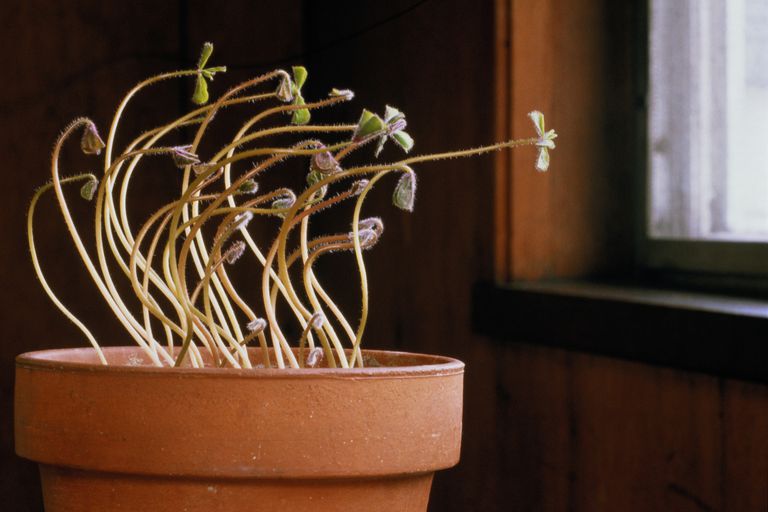
Look at the image below of a plant on a windowsill.
In your book, answer the following:
- What do you notice about the direction the plant is growing?
- What do you think is causing this?
- What do you predict would happen if the plant was rotated 180° so the leaves faced away from the window?
You have 3 minutes.
Daily Review
Answer the following 5 multiple choice questions in your book:
- Which WA plant produces woody follicles that open after fire to release seeds?
- Jarrah
- Banksia
- Tuart
- Sheoak
- A lignotuber helps a plant survive bushfire by:
- Insulating the cambium layer from heat
- Releasing seeds when the temperature rises
- Producing new shoots directly from the bark
- Storing energy and dormant buds underground
- Nocturnal behaviour in the bilby is classified as:
- A structural adaptation
- A physiological adaptation
- A behavioural adaptation
- A learned trait
- Countercurrent heat exchange in penguin flippers is classified as:
- A structural adaptation
- A behavioural adaptation
- A physiological adaptation
- An ecological adaptation
- Blubber in seals is classified as:
- A behavioural adaptation
- A physiological adaptation
- A structural adaptation
- An ecological adaptation
- B 2) D 3) C 4) C 5) C
Learning Intentions
Today we are learning about stimulus–response pathways and homeostasis — the mechanisms that allow all organisms to detect changes in their environment and respond in ways that support their survival.
Success Criteria
You will be successful if you have:
Keywords
- Stimulus
- What changes — a detectable change in the internal or external environment that triggers a response in an organism. Plural: stimuli. Examples include changes in temperature, light, moisture, chemicals, touch, pressure and sound.
- Receptor
- What detects the change — a specialised cell or organ that detects a specific type of stimulus and converts it into a signal that can be processed by a coordinator. Different receptors respond to different stimuli (e.g. thermoreceptors detect temperature; photoreceptors detect light).
- Coordinator
- Decides what to do — a structure such as the brain, spinal cord or an endocrine (hormone-producing) gland that receives signals from receptors, processes the information, and directs an appropriate response.
- Effector
- Makes the change — a muscle or gland that carries out the response directed by the coordinator. Muscles cause movement; glands release hormones or other substances.
- Response
- The overall response — the action taken by an organism as a result of receiving and processing a stimulus.
- Homeostasis
- The maintenance of a stable internal environment within an organism, despite changes in external conditions. From the Greek homoios (similar) and stasis (standing still). Examples include temperature regulation, blood pH and blood glucose control.
Learning Activities
Activity 1 — I DO: How Organisms Detect and Respond to Change
The Stimulus–Response Model
All responses in living organisms follow the same basic pathway:
Stimulus → Receptor → Coordinator → Effector → Response
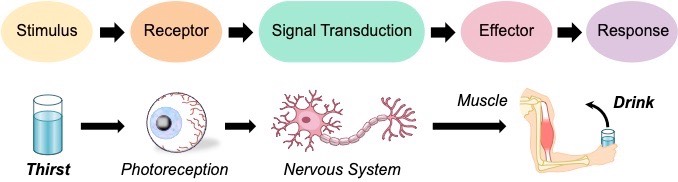
| Component | Role | Example |
|---|---|---|
| Stimulus | The change that is detected | Rising temperature, drop in light levels |
| Receptor | Detects the stimulus | Thermoreceptors in skin; photoreceptors in eyes |
| Coordinator | Processes the signal and coordinates a response | Brain, spinal cord, hypothalamus, hormones |
| Effector | Carries out the response | Muscles, glands |
| Response | The action taken | Sweating, moving to shade, stomata closing |
Types of Stimuli
Organisms respond to many different types of stimuli:
- Physical: temperature, light, sound, pressure, touch, gravity
- Chemical: CO₂ levels, oxygen, nutrients, toxins, hormones
- Biological: presence of a predator, competitor, or mate
Plant Responses
Plants cannot move away from danger, but they respond using tropisms — directional growth responses to stimuli.
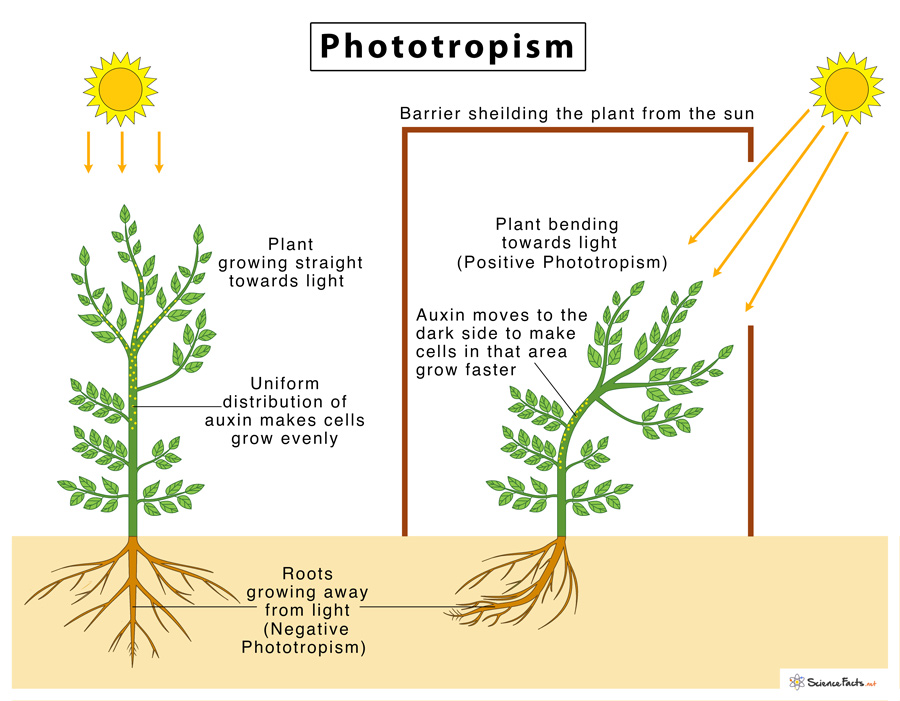
| Tropism | Stimulus | Plant Response |
|---|---|---|
| Phototropism | Light | Shoots grow toward light (positive); roots grow away (negative) |
| Geotropism (gravitropism) | Gravity | Roots grow downward; shoots grow upward |
| Stomatal response | CO₂ levels, light, water stress | Stomata open in the light to allow CO₂ in; close when water stress is high |
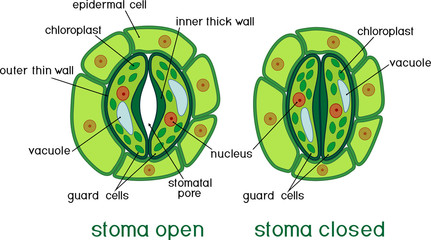
WA Example: During hot summer afternoons in the jarrah forest, banksias and eucalypts close their stomata to reduce water loss by transpiration. This is a stimulus–response to the combined stimuli of high temperature and falling water availability.
Animal Responses
Animals have two main communication systems for responding to stimuli:
| System | Speed | Duration | Examples |
|---|---|---|---|
| Nervous system | Very fast (milliseconds) | Short-term | Reflex actions, withdrawal from pain, eye-blink reflex |
| Endocrine (hormonal) system | Slower (seconds to hours) | Long-term | Adrenaline release during stress, reproductive hormones |
Reflex arc: An automatic, rapid response that bypasses the brain for speed. When you touch a hot object, signals travel from receptor → spinal cord → effector muscle, and your hand withdraws before your brain consciously registers pain.
Homeostasis
All the stimulus–response systems in an organism work together to maintain homeostasis — a stable internal environment.
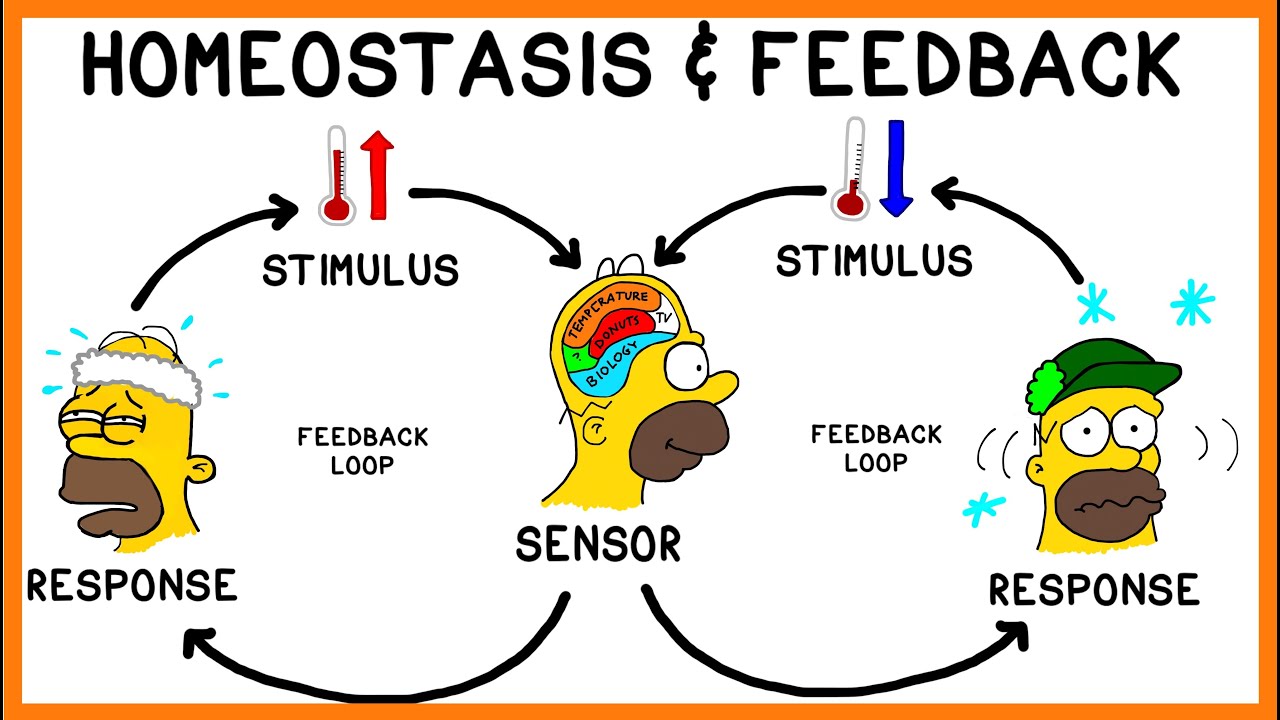
- Variables that are regulated include: body temperature, blood pH, blood glucose, water balance.
- The key mechanism is negative feedback: when a variable moves away from its set point, the body responds in a way that opposes and reverses the change — returning the variable to normal.
WA Examples of Homeostatic Responses:
| Animal | Stimulus | Response | Type |
|---|---|---|---|
| Banksia | High temperature, low humidity | Stomata close → reduces transpiration | Physiological |
| Quokka (Rottnest Island) | Rising midday temperature | Retreats into dense shade, reduces activity | Behavioural |
| Thorny devil | Cool morning temperatures | Orients body perpendicular to sun rays to maximise solar radiation absorption | Behavioural |
| Red kangaroo | Rising core body temperature | Licks forearms; increased panting | Physiological + Behavioural |
Check for Understanding
Fill in the blank boxes to complete the stimulus–response chain:
Scenario: A bilby emerges from its burrow and detects the scent of a predator on the night breeze.
| Stimulus | Receptor | Coordinator | Effector | Response |
|---|---|---|---|---|
| Chemical scent of predator |
Answer: Receptor — olfactory (smell) receptors in the nose; Coordinator — brain (processes the threat signal); Effector — leg muscles; Response — retreats rapidly back into burrow
Activity 2 — WE DO: Stimulus–Response Table for WA Organisms
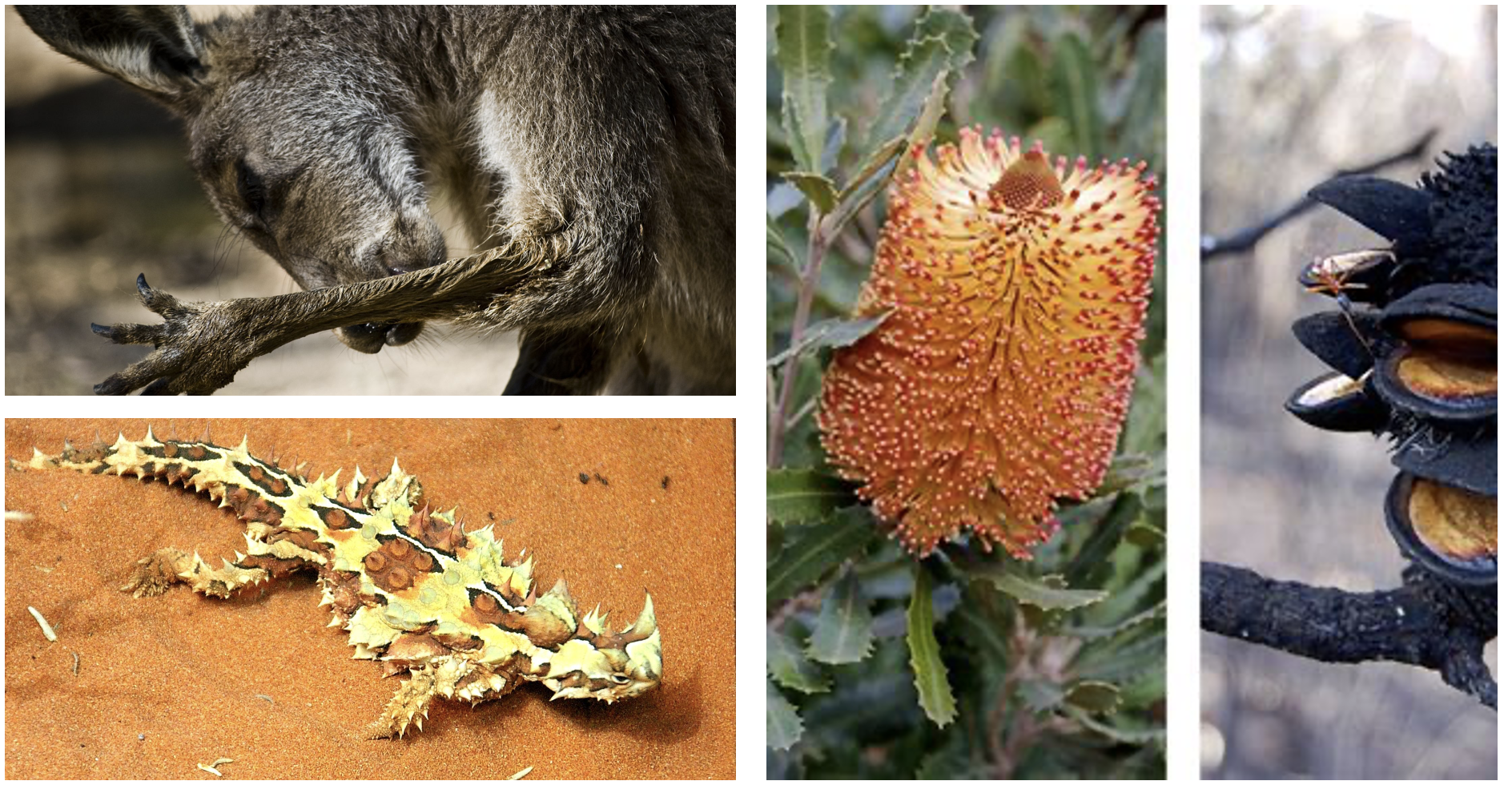
As a class, we will complete a stimulus–response table for three WA organisms — one plant, one ectotherm and one endotherm.
| Organism | Stimulus | Receptor | Coordinator | Effector | Response | Type (S/B/P) |
|---|---|---|---|---|---|---|
| Banksia | Hot, dry afternoon — water stress | Stomata close | ||||
| Thorny devil | Low body temperature at dawn | Orients body toward sun | ||||
| Red kangaroo | Core body temperature rising above 38°C | Licks forearms; seeks shade |
Discussion Questions
- What do all three responses have in common? What does each organism gain from responding to its stimulus?
- The thorny devil’s morning orientation is voluntary. Does that make it less effective as a response? Why or why not?
- Can you think of a scenario in which a stimulus–response might fail — where the response doesn’t return the organism to its set point? What might happen?
Activity 3 — YOU DO: Stimulus–Response Pathways
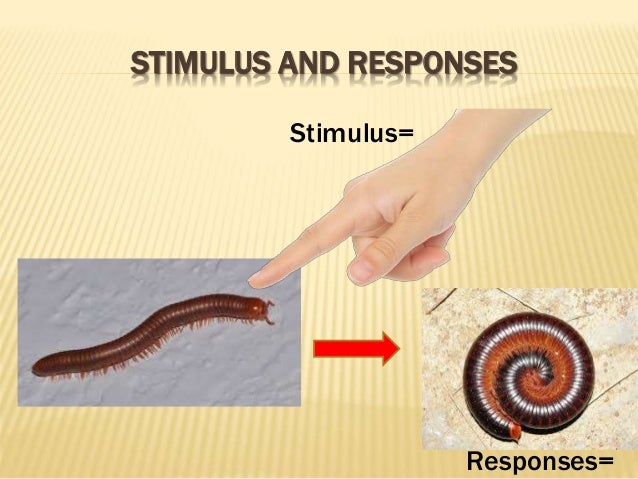
Complete the worksheet: 151-responding-to-environment-you-do.docx
You will complete stimulus–response chains for given scenarios and explain why each response improves the organism’s survival chances.
Work independently. You have 10 minutes.
Notes
Use this space to write any important points from today’s lesson.
Reflection
- A specialised cell that detects a stimulus is called:
- An effector
- A receptor
- A coordinator
- A response
- Which of the following is the correct order in a stimulus–response pathway?
- Response → receptor → effector → stimulus
- Stimulus → effector → receptor → response
- Stimulus → receptor → coordinator → effector → response
- Receptor → stimulus → response → effector
- Homeostasis refers to:
- An organism’s ability to move toward a food source
- The maintenance of a stable internal environment
- The process of growing new leaves after fire
- The study of organisms in ecosystems
- A banksia closing its stomata on a hot afternoon is responding to which stimulus?
- Predator detection
- Change in light direction
- Water stress and rising leaf temperature
- Soil nutrient levels
- Short answer: Using the stimulus–response model, describe what happens when you touch a hot object and quickly pull your hand away. Identify the stimulus, receptor, coordinator, effector and response in your answer.
Home-study
Think of a time you responded to a change in your environment today (e.g. turning on a light, putting on a jumper, eating when hungry). Write a short paragraph (3–4 sentences) describing your stimulus–response using the correct vocabulary: stimulus, receptor, coordinator, effector and response.